https://twitter.com/home https://www.facebook.com/Shabbir.Hussain191
By Shabbir Hussain
ISLAMABAD, Jan 31 (Diplomatic Star): In a major step toward strengthening Pakistan’s healthcare system through science and innovation, the Alliance Good Governance Foundation and the Pakistan Young Academy (PYA), in collaboration with the Science Diplomacy arm of the Global Young Academy, have entered into a strategic partnership to promote technology-driven, science-based healthcare solutions across the country.
The collaboration aims to advance high-tech health innovations through joint research initiatives, innovation platforms, interdisciplinary cooperation, and evidence-based policy reforms, with the broader objective of addressing Pakistan’s complex and evolving public health challenges.


Stakeholders believe the partnership comes at a critical time when the country is grappling with rising disease burdens, limited healthcare access, and increasing pressure on public health infrastructure.
The partnership was formally sealed through the signing of a Memorandum of Understanding (MoU) between Patron-in-Chief of the Alliance Good Governance Foundation, Dr. Tariq Mehmood Khan, and President of the Pakistan Young Academy, Dr. Muhammad Qasim.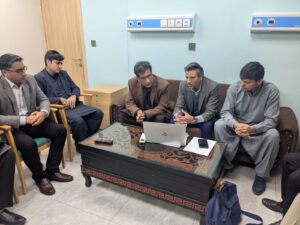
The MoU marks a significant milestone in efforts to bridge the gap between scientific research, healthcare innovation, and public policy in Pakistan.
The signing ceremony brought together leading academics, researchers, and development professionals, underscoring the importance of collective action in shaping the future of healthcare.
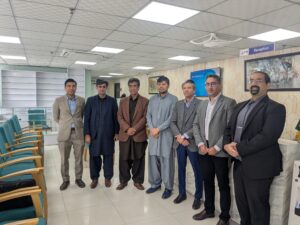
Among those present were Dr. Wasim Sajjad, Fulbright Scholar, Associate Professor at NUMS University, Vice President of the Pakistan Young Academy and Member of the Global Young Academy; Dr. Hussain Mustatab Wahedi, Secretary General of the Pakistan Young Academy, Head of Department and Associate Professor at the Atta-ur-Rehman School of Biological Sciences, NUST Islamabad; Director Alliance Shabbir Hussain; Director Projects Sabih Nasir; IT Expert Ali Malik; Manager Alliance Ghazali Ghaznavi; and Social Media Coordinator Fazail Shah.
Speaking to Alliance News, Dr. Tariq Mehmood Khan said Pakistan was facing a myriad of health challenges that could no longer be effectively addressed through conventional approaches alone.
He stressed that the integration of high-tech health solutions was no longer optional but a necessity for improving health outcomes and strengthening the resilience of the healthcare system.
“Pakistan is dealing with multiple health challenges, including non-communicable diseases, maternal and child health issues, and inequitable access to quality healthcare.
These challenges demand innovative, technology-based solutions. It is the right time to introduce and scale up tech-health innovations, particularly within the public health sector,” Dr. Tariq Khan said.

He added that collaboration between scientific institutions, policy platforms, and healthcare providers was essential to translate research into practical solutions that directly benefit patients.
According to him, the Alliance Good Governance Foundation is committed to supporting policy-oriented research and governance reforms that enable the adoption of advanced healthcare technologies at both national and provincial levels.
President of the Pakistan Young Academy and President of Premium International Hospital, Dr. Muhammad Qasim, echoed these sentiments, describing the partnership as a timely and forward-looking initiative.
He said Pakistan must move decisively toward a technology-enabled healthcare policy framework to meet future demands.
“This is the right moment to move forward toward tech-health policies. Technology-driven health solutions represent the future of healthcare systems worldwide, and Pakistan cannot afford to lag behind. People need to shift toward tech-health models that improve efficiency, accuracy, and patient care,” Dr. Qasim said.
He highlighted the role of young scientists, researchers, and clinicians in driving innovation and shaping evidence-based health policies.
Dr. Qasim noted that platforms like the Pakistan Young Academy and the Global Young Academy provide critical spaces for interdisciplinary dialogue and international collaboration, which are vital for developing sustainable healthcare solutions.

As part of the collaboration, Dr. Muhammad Qasim invited Dr. Tariq Mehmood Khan to visit Premium International Hospital to observe the practical application of advanced healthcare technologies.
During the visit, Dr. Tariq Khan toured various departments of the hospital, including the intensive care unit (ICU), operation theatres, and gynaecological surgical units.
The facilities were equipped with modern, high-tech medical systems designed to ensure improved diagnostics, patient safety, and quality care.
 Following the visit, Dr. Tariq Khan described the hospital’s infrastructure and service delivery as a model that should be replicated across Pakistan.
He emphasized that both public and private healthcare sectors must adopt similar technology-driven approaches to cope with the country’s challenging health situation.
“These are the models we need to adopt in both public and private healthcare sectors. Advanced technology, when combined with skilled professionals and effective governance, can significantly improve patient outcomes and help Pakistan overcome its current healthcare challenges,” he said.

Participants at the event noted that the partnership is expected to foster interdisciplinary collaboration between health professionals, scientists, technologists, and policymakers. By aligning research with policy needs and implementation mechanisms, the initiative aims to accelerate the adoption of sustainable, technology-based healthcare solutions nationwide.
Experts believe the collaboration could also contribute to long-term reforms in health governance by promoting data-driven decision-making, digital health systems, telemedicine, artificial intelligence-assisted diagnostics, and innovative biomedical research.

These efforts, they said, are essential for improving access to healthcare, particularly in underserved and remote areas.
The Alliance Good Governance Foundation and the Pakistan Young Academy reiterated their commitment to working closely with national and international partners to strengthen Pakistan’s healthcare ecosystem.
Through science diplomacy, innovation, and inclusive policy engagement, the partnership seeks to position Pakistan on a path toward a more resilient, equitable, and future-ready healthcare system.