 https://twitter.com/home https://www.facebook.com/Shabbir.Hussain191
By Shabbir Hussain
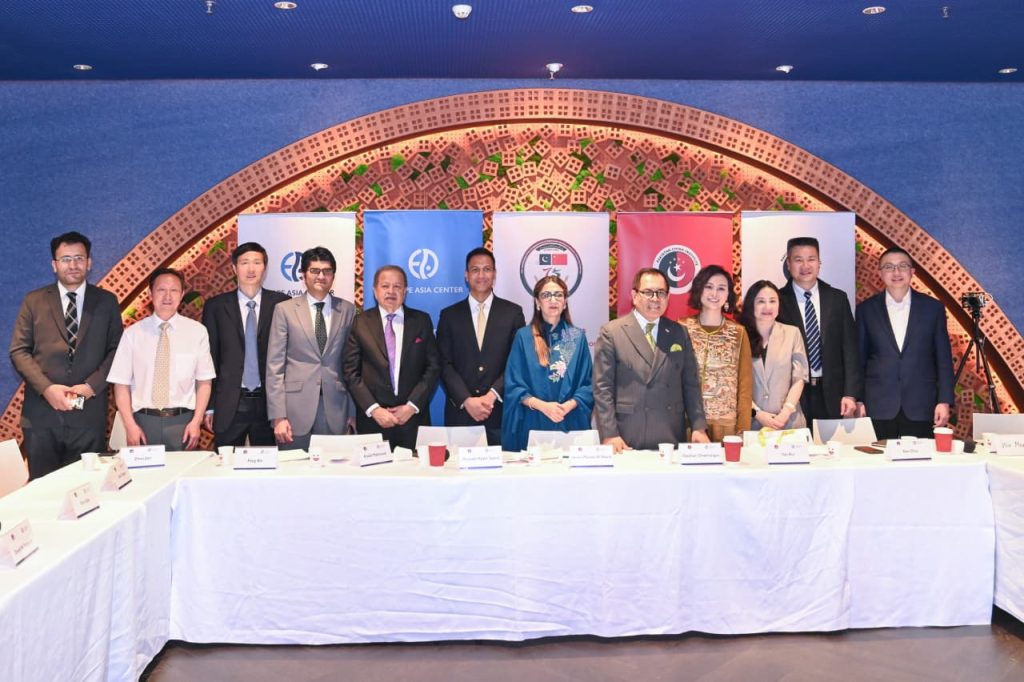
ISLAMABAD, May 18 (Alliance News): Experts, policymakers and business leaders at a Beijing summit called for transforming CPEC 2.0 into a climate-aligned platform driven by renewable energy, green industrialization, sustainable finance and technology transfer to support Pakistan’s long-term economic growth and environmental goals.
The summit served as a major platform for discussing the future direction of CPEC 2.0 and its alignment with climate action, renewable energy development, green industrialization, sustainable finance, critical minerals, clean technology supply chains and broader regional cooperation under the Belt and Road Initiative (BRI).
Participants emphasized that while the first phase of CPEC played a transformative role in addressing Pakistan’s infrastructure and energy deficits, the next phase must focus on climate-resilient growth, industrial modernization and sustainable development.
They stressed that Green CPEC has the potential to become a model for environmentally responsible economic cooperation within the Global South.
The summit was held at a time when countries around the world are accelerating efforts to transition toward low-carbon economies in response to climate change, energy security concerns and evolving international trade requirements.
China’s own progress in renewable energy development was highlighted as an example of what can be achieved through long-term planning and policy consistency.
According to figures shared during the summit, China’s cumulative grid-connected wind and solar power capacity reached 1.84 billion kilowatts in 2025, accounting for 47.3 percent of the country’s total installed power generation capacity and surpassing thermal power generation for the first time.
For Pakistan, participants noted, the energy transition has become both an environmental necessity and an economic imperative. Pakistan’s updated Nationally Determined Contribution (NDC) under the Paris Agreement commits the country to reducing greenhouse gas emissions by 50 percent below business-as-usual projections by 2030.
The country has also set ambitious targets of generating 60 percent of electricity from renewable energy sources and achieving 30 percent electric vehicle adoption by the same year.
Welcoming participants, Yan Rui, Secretary-General of the Europe-Asia Center, highlighted the changing dynamics of regional connectivity under the Belt and Road Initiative.
She noted that BRI cooperation has entered a new stage where infrastructure development must be complemented by stronger policy coordination, sustainable investment frameworks and climate-sensitive development strategies.
She emphasized that platforms such as the Beijing summit play an important role in building mutual understanding among governments, institutions and businesses working on green development initiatives across Asia and Europe.
Yan Rui said that future cooperation under the Belt and Road Initiative should focus not only on physical connectivity but also on knowledge sharing, technological innovation and sustainable economic growth.
Opening the proceedings, Mustafa Hyder Sayed reflected on the 75-year partnership between Pakistan and China and stressed the need to redefine bilateral cooperation in accordance with future development challenges.
He said that the China-Pakistan Economic Corridor has already delivered significant benefits to Pakistan through investments in energy, infrastructure and connectivity.
However, he argued that CPEC must now evolve from a first-generation infrastructure corridor into a comprehensive platform for green industrial transformation.
According to Sayed, renewable energy, clean manufacturing, technology transfer, industrial upgrading and climate finance should form the foundation of CPEC 2.0.
He said Pakistan and China possess a unique opportunity to strengthen cooperation in sectors that can drive sustainable economic growth while contributing to climate mitigation and environmental protection.
The summit also examined the practical challenges and opportunities associated with financing large-scale renewable energy projects.
Zhou Jian, Chief Executive Officer of CSAIL, discussed the financing and implementation of renewable energy projects across Belt and Road countries.
Drawing upon China’s extensive experience in developing large-scale clean energy projects, he highlighted the importance of institutional coordination, long-term planning and bankable project structures.
He emphasized that successful energy transitions require strong regulatory frameworks, investor confidence and sustained political commitment.
His remarks underscored the importance of adopting proven renewable energy models that can accelerate clean power generation in Pakistan and other developing countries.
A significant focus of the discussions was the role of capital markets in supporting green development initiatives.
Ken Chiu, Vice President of the Hong Kong Stock Exchange, highlighted the growing importance of sustainable finance in shaping investment decisions around the world.
He explained that international investors are increasingly demanding climate-related disclosures, transparent governance structures and credible environmental commitments before investing in infrastructure and industrial projects.
He said stronger cooperation between financial institutions, governments and development partners could help mobilize the capital needed for low-carbon infrastructure and climate-resilient development.
Chiu also noted that evolving global reporting standards are encouraging companies to improve climate disclosures and environmental accountability, making sustainable finance an increasingly important component of economic planning.
The summit also benefited from regional perspectives on energy transition and sustainable development.
Djauhari Oratmangun, Ambassador of Indonesia to China, shared Indonesia’s experience in balancing economic growth, energy security and environmental sustainability.
He explained that Indonesia’s transition efforts offer valuable lessons for countries seeking to reduce reliance on fossil fuels while maintaining industrial growth and social stability.
His remarks highlighted the importance of integrating international financing, domestic policy reforms and long-term planning into national energy transition strategies.
Participants noted that Pakistan could draw important lessons from Indonesia’s approach to managing the complex challenges associated with energy transition and industrial modernization.
The role of the private sector in advancing higher-value economic cooperation between Pakistan and China also featured prominently in the discussions.
Khalid Mahmood, Group Chief Executive Officer of Getz Pharma Pvt. Ltd. and Getz Pharma International FZ LLC, emphasized that the next phase of CPEC should extend beyond traditional infrastructure and energy projects.
He argued that sectors such as pharmaceuticals, life sciences, biotechnology and advanced manufacturing offer significant opportunities for expanding bilateral cooperation and creating high-value exports.
Mahmood stressed that technology partnerships, regulatory improvements and private-sector leadership would be critical for developing globally competitive industrial ecosystems capable of generating sustainable economic growth.
Delivering the keynote address as chief guest, Shezra Mansab Ali Kharal highlighted Pakistan’s climate commitments under the Paris Agreement and their direct relevance to future CPEC projects.
She emphasized that future infrastructure, industrial and energy cooperation must align with Pakistan’s climate objectives and broader development priorities.
The minister noted that a climate-aligned CPEC could help Pakistan attract green finance, expand renewable energy deployment, strengthen resilience to climate-related risks and position Pakistan-China cooperation as a leading example of sustainable development in the Global South.
She reaffirmed the government’s commitment to promoting environmentally responsible development and enhancing international partnerships to support Pakistan’s green transition.
Muhammad Umar Farooq, Senior Researcher at the Pakistan-China Institute, focused on the importance of Environmental, Social and Governance (ESG) principles and blended finance mechanisms in shaping future CPEC investments.
He argued that CPEC 2.0 should move beyond traditional infrastructure financing models and incorporate green bonds, sukuk instruments, concessional financing, private investment and carbon-linked financial mechanisms.
According to Farooq, ESG standards should serve as practical governance tools that improve transparency, strengthen investor confidence, enhance community protections and ensure the long-term sustainability of development projects.
The summit’s first technical session was chaired by Dr. Yang Fuqiang, Senior Advisor at the Climate Change and Energy Transition Programme of the Institute of Energy at Peking University.
He discussed China’s energy transition experience and highlighted how strategic planning, policy consistency, technological innovation and industrial development have enabled China to become a global leader in renewable energy.
Dr. Yang said many of these lessons could be adapted by developing countries, including Pakistan, while taking into account local realities such as financing constraints, energy demand patterns and institutional capacities.
Professor Xu Qinhua, Director of the Research Centre on Global Governance at Renmin University of China, addressed the evolving international climate governance landscape and its implications for Belt and Road projects.
She observed that infrastructure development is increasingly shaped by global expectations relating to climate alignment, environmental safeguards, transparency and social responsibility.
Professor Xu emphasized that CPEC 2.0 must incorporate these evolving standards while remaining responsive to Pakistan’s economic priorities and development needs.
Participants concluded that the next phase of the China-Pakistan Economic Corridor should prioritize renewable energy, green manufacturing, climate finance, responsible critical mineral development, technology transfer and environmentally sustainable industrial growth.
The summit acknowledged the achievements of CPEC’s first phase, which contributed approximately 8,000 megawatts of electricity to Pakistan’s national grid and significantly improved energy availability across the country.
However, participants stressed that future investments should focus on higher-quality, climate-aligned and export-oriented growth capable of generating long-term economic benefits while supporting Pakistan’s sustainability objectives.
The Pakistan-China Institute expressed appreciation to all speakers, partner organizations and participants for contributing to a meaningful and forward-looking dialogue on the future of Green CPEC and Belt and Road cooperation.
The summit concluded with a strong consensus that climate action, green finance, sustainable infrastructure and industrial innovation must become the defining pillars of CPEC 2.0, ensuring that Pakistan-China cooperation remains relevant and responsive to the challenges and opportunities of the twenty-first century.
Meta Description:
Meta Tags:
Focus Keyphrase: