 https://twitter.com/home https://www.facebook.com/Shabbir.Hussain191
By Shabbir Hussain
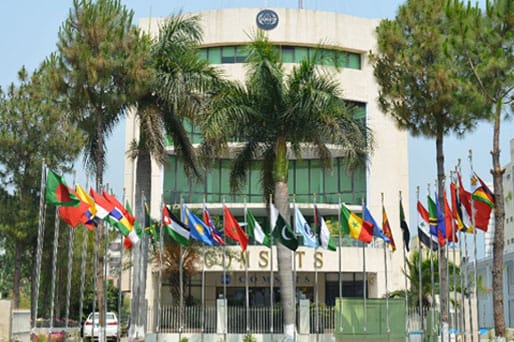
ISLAMABAD, May 9 (Diplomatic Star): COMSATS has emerged as one of the leading international organizations promoting science, technology, and innovation as drivers of sustainable development across the developing world.
Since its establishment in 1994 in Islamabad under the vision of Nobel Laureate Dr. Abdus Salam, COMSATS has played a transformative role in strengthening scientific cooperation and reducing the technological divide between developed and developing nations.
Founded with the objective of enhancing scientific capacity and technological advancement in the Global South, COMSATS has successfully built a strong international network comprising member states across Asia, Africa, Latin America, and the Middle East.
Through this extensive collaboration framework, the organization has facilitated South-South and North-South cooperation in key areas including information technology, biotechnology, climate resilience, agriculture, environmental sustainability, and renewable energy.
One of the organization’s most significant achievements is the establishment of an extensive network of Centers of Excellence and research institutions that collectively contribute to scientific research, innovation, and knowledge exchange.
These collaborative platforms have enabled researchers, scientists, and policymakers from developing countries to share expertise, strengthen institutional capacities, and jointly address emerging global challenges.
Among COMSATS’ landmark accomplishments is the establishment of COMSATS University Islamabad, which has evolved into one of Pakistan’s leading higher education and research institutions.
Recognized for its academic excellence in engineering, information technology, and scientific research, the university reflects COMSATS’ broader commitment to human resource development and technological education in developing nations.
The organization has also gained recognition for implementing practical and community-oriented initiatives aimed at improving quality of life through technology-driven solutions.
Programs such as COMSATS Internet Services (CIS) and tele-health initiatives have significantly enhanced digital connectivity and healthcare accessibility in remote and underserved regions of Pakistan.
These projects demonstrate COMSATS’ ability to transform scientific innovation into impactful public service initiatives benefiting marginalized communities.
In addition to infrastructure and development projects, COMSATS has played a central role in promoting scientific learning and capacity-building.
The organization regularly hosts international conferences, technical workshops, training programs, and fellowship opportunities for students, scientists, and researchers.
These initiatives have strengthened technical expertise, encouraged innovation, and fostered collaborative research among member countries.
COMSATS has further expanded its global influence through strategic partnerships with leading international organizations, including UNESCO and UNIDO.
These collaborations have enabled the organization to mobilize resources, support large-scale development projects, and address pressing global challenges such as climate change, technological inequality, and sustainable development.
Experts believe that COMSATS’ continued emphasis on policy advocacy and strategic planning has also contributed significantly to strengthening science and technology governance in developing countries.
By supporting governments in integrating research and innovation into national development agendas, COMSATS has helped promote policies that prioritize technological growth, digital inclusion, and scientific advancement.
Over the past three decades, COMSATS has evolved into a globally respected platform for scientific cooperation and sustainable development.
Its contributions in education, digital transformation, research collaboration, healthcare innovation, and policy support continue to empower developing nations and strengthen their capacity to address future challenges through science and technology.
As the global demand for innovation-driven development continues to rise, COMSATS remains committed to expanding its initiatives, partnerships, and technological outreach to create a more connected, knowledge-based, and sustainable future for the developing world.