 https://twitter.com/home https://www.facebook.com/Shabbir.Hussain191
By Shabbir Hussain
ISLAMABAD, Jun 30 (Diplomatic Star): Experts at a policy consultation have called for a comprehensive and integrated economic governance framework to help Pakistan overcome recurring cycles of financial instability, stressing that sustainable economic growth requires policy continuity, institutional coordination, structural reforms and a long-term development vision.
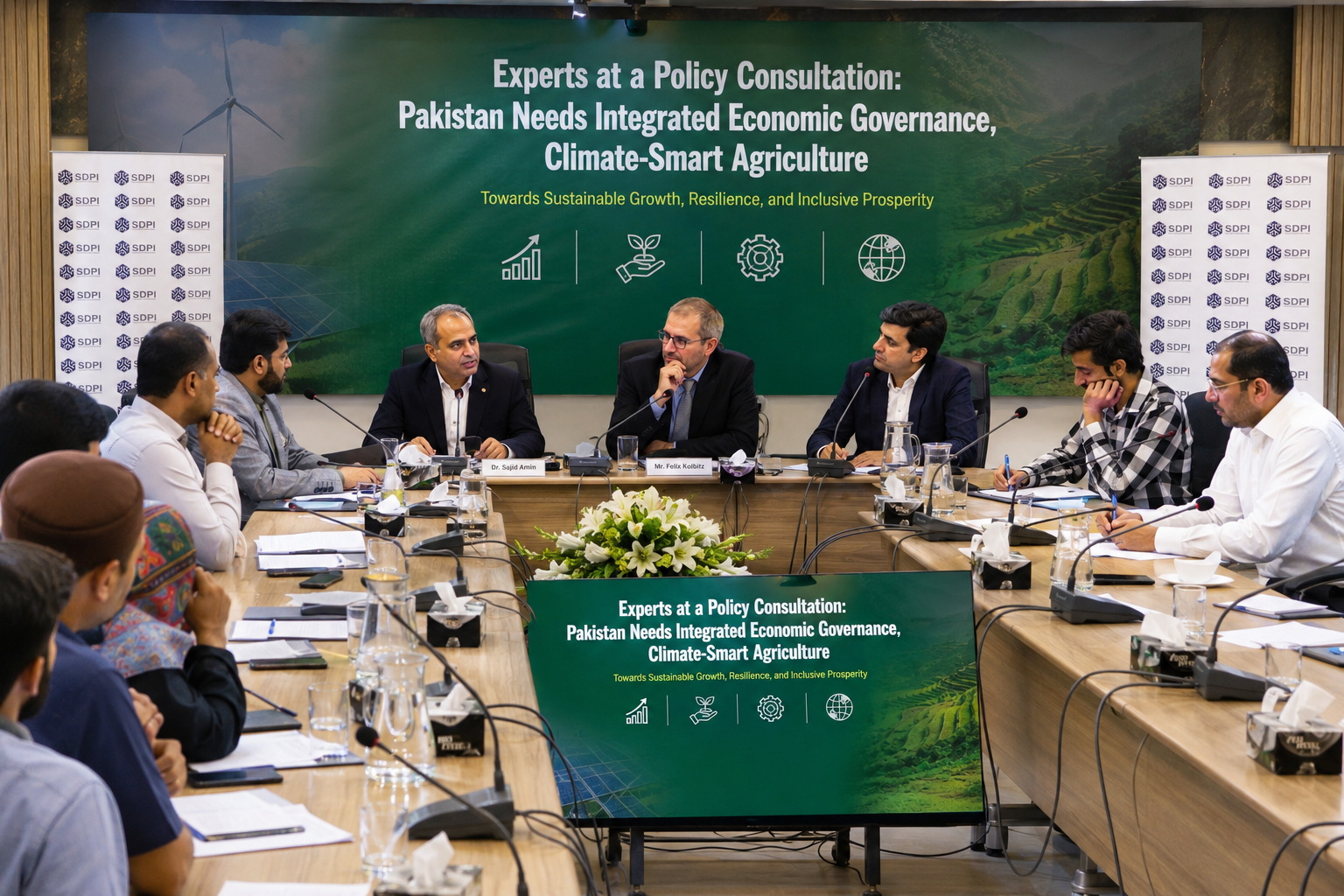
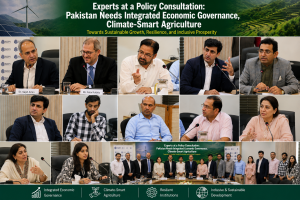
The consultation titled “Pakistan’s Reform Agenda for Integrated Economic Governance” was jointly organized by the Sustainable Development Policy Institute (SDPI) and Friedrich-Ebert-Stiftung (FES) in Islamabad, where economists, policymakers and development experts discussed challenges facing Pakistan’s economy and possible pathways towards sustainable growth.
Speakers emphasized that Pakistan’s economic difficulties were not only linked to financial shortages but also reflected weaknesses in governance, policy implementation, coordination among institutions and lack of continuity in reforms.
In his opening remarks, Dr. Sajid Amin Javed, Deputy Executive Director (Research) at SDPI, said Pakistan had repeatedly achieved short-term macroeconomic stabilization but failed to maintain long-term economic momentum.
“Almost every third fiscal cycle, Pakistan achieves stabilization but subsequently loses it,” he said, adding that the country’s challenge was not the absence of policies but the lack of consistency, coordination and effective implementation.
Dr. Javed said Pakistan required an integrated economic governance model where fiscal policy, monetary policy, trade strategy, industrial development and social protection programs worked together instead of moving in conflicting directions.
He highlighted that Pakistan’s average economic growth over the past decades remained around four percent, which was significantly lower compared with regional economies such as Bangladesh and India.
According to him, Pakistan’s economic growth has often remained short-lived and consumption-driven, failing to create sufficient employment opportunities or reduce poverty.
He pointed out that while GDP growth improved during the last fiscal year, rising poverty, unemployment and income inequality indicated that the quality of growth remained a major concern.
He recalled that Pakistan was among the fastest-growing economies in South Asia during the 1980s, achieving average annual growth of more than 6.5 percent, but economic expansion slowed considerably in recent years.
Highlighting policy contradictions, Dr. Javed said Pakistan frequently focused on export-led growth but simultaneously maintained policies that reduced export competitiveness. He stressed the need for better alignment between trade, industrial and exchange rate policies.
He also discussed challenges linked with resource distribution under the National Finance Commission (NFC) Award, saying that current mechanisms required reforms to encourage provinces to improve revenue generation and economic performance.
Dr. Javed appreciated recent government steps towards tariff rationalization and a more market-based exchange rate system, saying such measures could support competitiveness if implemented alongside broader structural reforms.
Felix Kolbitz, Country Director of FES Pakistan, said economic reform was not only a technical exercise but also required political commitment and institutional courage.
Referring to former German Chancellor Willy Brandt’s call for “more democracy,” he said Pakistan similarly needed stronger institutions and bold reforms to establish an economic governance system capable of preventing repeated crises rather than responding only after problems emerge.
He said Pakistan had experienced a repeated cycle of economic crisis, stabilization programs, reform commitments and temporary recovery, followed by renewed challenges.
Felix emphasized that economic policies should ultimately improve people’s lives rather than only achieve positive macroeconomic indicators. He said inclusive growth must create opportunities for women, youth and marginalized communities.
Dr. Aliya Hashmi, Senior Economist and academician, stressed the need for clearly defined national economic targets supported by a strong implementation framework and monitoring system.
She said Pakistan’s growing youth population required productive employment opportunities and warned that GDP growth alone could not deliver sustainable development without quality job creation.
She also highlighted the importance of increasing women’s participation in the workforce, noting that countries with higher female economic participation had achieved stronger social and economic outcomes.
Meanwhile, Dr. Muhammad Ali Talpur, Joint Chief Economist at the Ministry of Planning, identified political uncertainty, weak coordination and lack of policy continuity as major barriers to effective economic governance.
He said the government had identified institutional weaknesses and launched reforms involving multiple departments to improve governance structures.
Dr. Talpur said Pakistan continued to face persistent internal and external economic deficits, limiting policy choices for decades. He stressed that future reforms should focus on human capital development, export growth, deregulation, tariff reforms and improving Pakistan’s competitiveness in global markets.
Adding an agriculture and climate perspective to the economic reform debate, Director Alliance Good Governance Foundation Shabbir Hussain said Pakistan’s economic recovery strategy must include agriculture-sensitive policies because millions of people depend on farming for livelihoods and food security.
He said climate change had created new challenges for Pakistan’s agricultural sector, including unpredictable weather patterns, floods, droughts, rising temperatures and water shortages.
“Pakistan needs a climate-resilient agriculture policy that supports farmers through modern technology, research-based solutions and access to climate-resistant seeds. Without protecting agriculture from climate risks, economic reforms will remain incomplete,” Shabbir Hussain said.
He stressed that the government should promote the development and availability of agricultural seeds capable of surviving extreme weather conditions, including heat-resistant, drought-tolerant and flood-resilient varieties.
According to him, agricultural reforms should also include efficient irrigation systems, modern farming techniques and better access to renewable energy.He said solar energy could play an important role in reducing agricultural costs, improving irrigation efficiency and supporting rural economic development.
“Affordable solar solutions for farmers can reduce dependence on expensive energy sources and help create a more sustainable agricultural economy,” he added.
Shabbir Hussain further emphasized the importance of an import-oriented economic policy that enables Pakistan to bring advanced agricultural machinery, modern technologies, research expertise and climate adaptation solutions from global markets.
He said Pakistan should not only focus on exports but also create policies that allow the country to import essential technologies required for productivity improvement and economic modernization.
“Economic development requires openness to innovation. Pakistan must adopt policies that allow access to global technology, especially in agriculture, energy and industrial sectors,” he said.
Experts at the consultation agreed that Pakistan’s future economic strategy must move beyond short-term crisis management and focus on institutional reforms, productivity growth, climate resilience and inclusive development.
They stressed that integrated economic governance should connect economic planning with agriculture, climate adaptation, energy security and human development to create a stronger foundation for sustainable growth.